Wake up gently to a sunrise, not a screeching alarm.
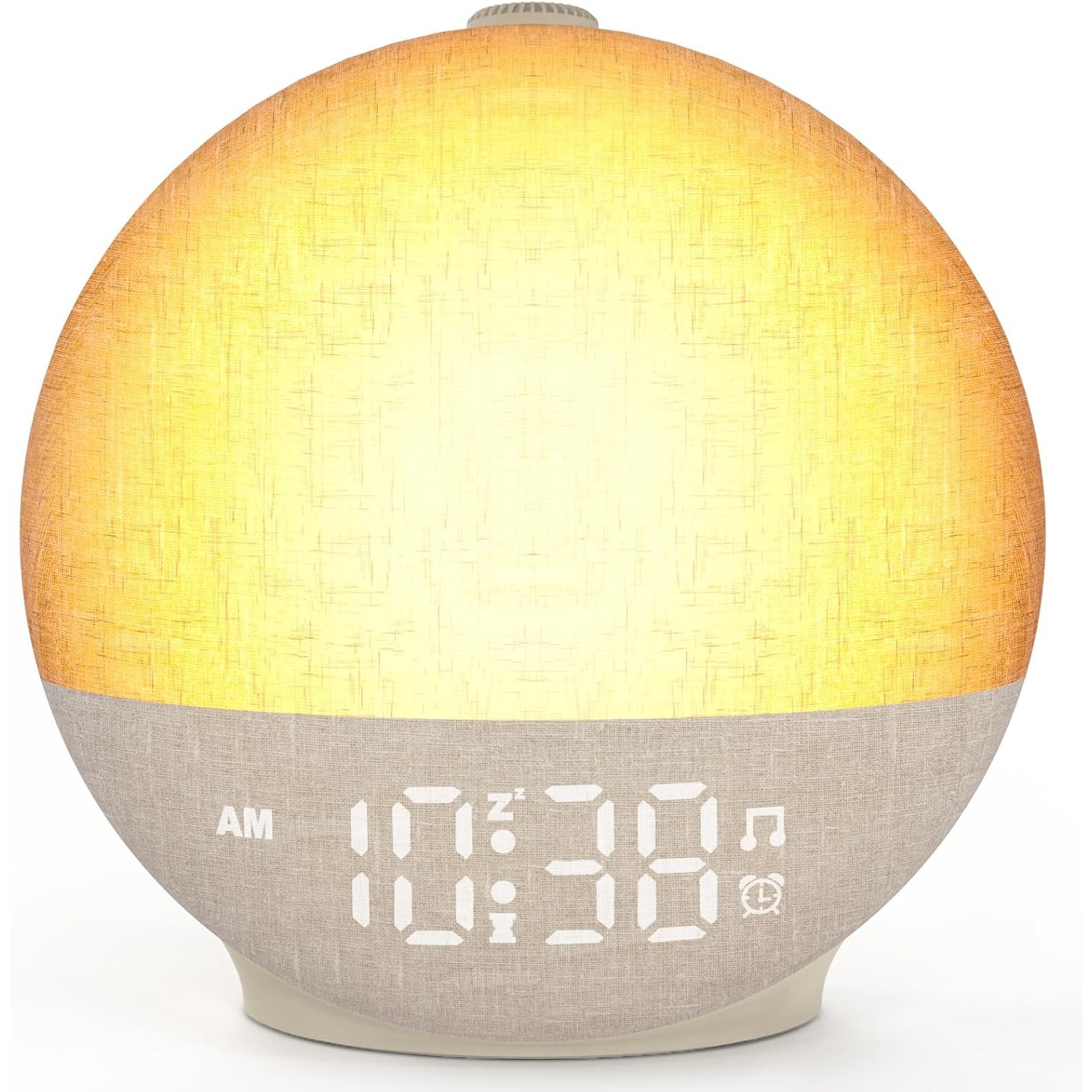
The Sunrise Alarm Clocks Sunrise Alarm Clock is a wake-up light, white noise machine and night light in one. It brightens gradually before your alarm so your body eases awake — far kinder on heavy sleepers, kids and shift workers than any buzzer. Set it once with a simple knob; no app required.
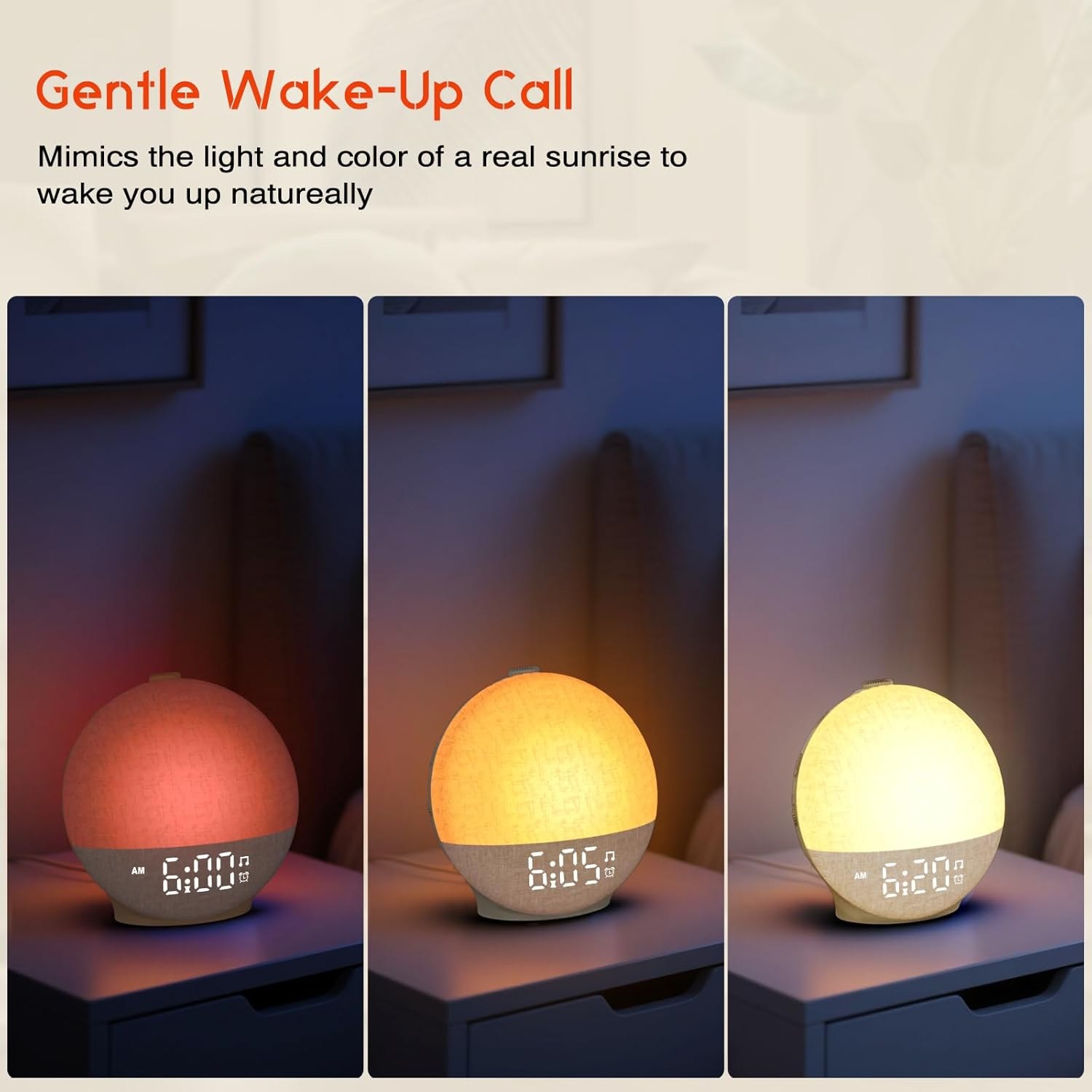
Sunrise wake-up: light builds slowly so you rise calm, not startled.
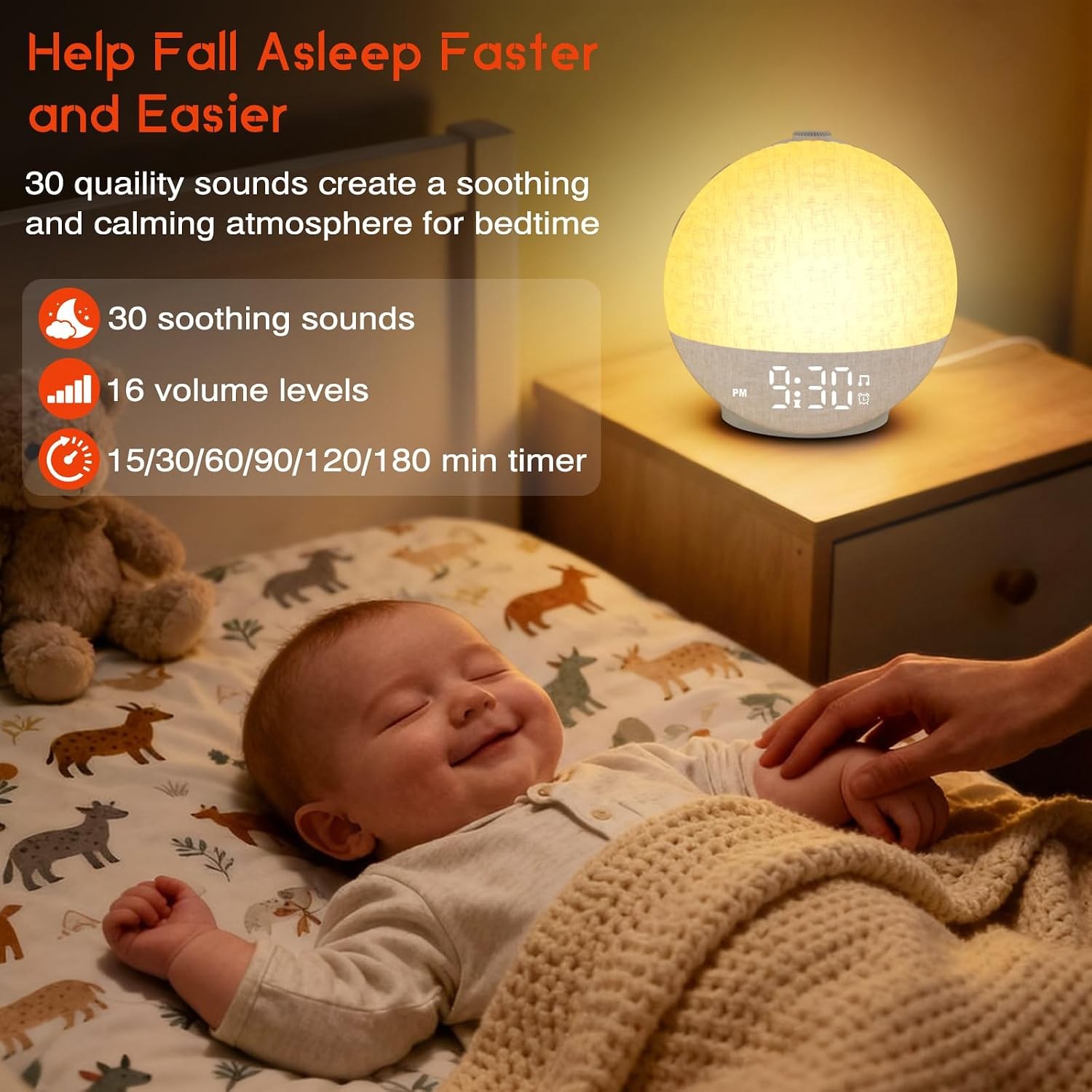
30 sleep sounds and white noise to fall asleep faster and mask the night.
12-colour night light and a sunset wind-down — one device for the whole night.
This isn't a gadget for people who already bounce out of bed. It's for the households where mornings are a fight and nights are restless.
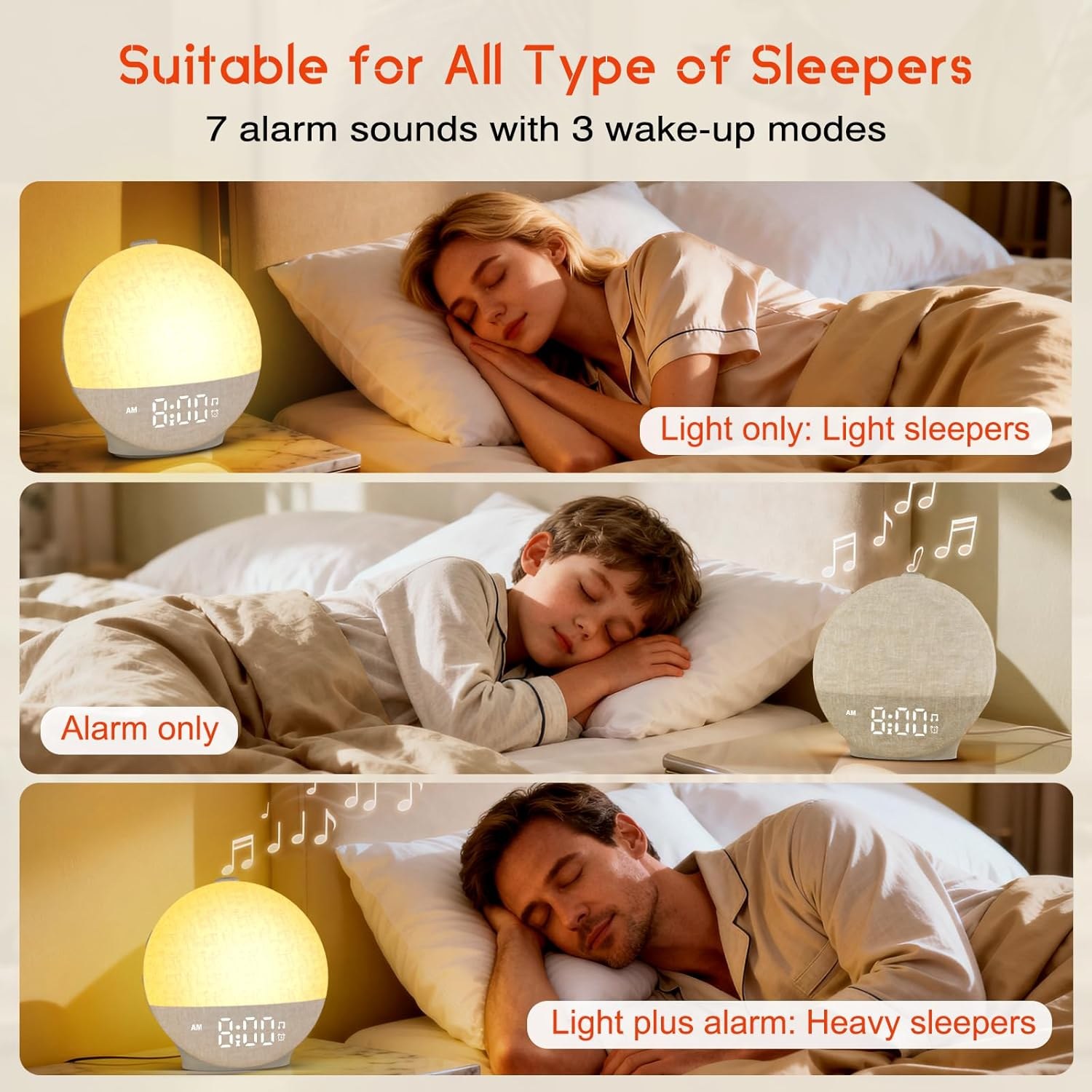
Heavy sleepers
Light plus sound wakes far more reliably than a buzzer alone. You get a fully bright room and a sound you can't ignore, so you actually get up.
Kids & school mornings
A light-first wake-up ends the buzzer battle, and the colour night light doubles as a bedtime companion they can work themselves.
Shift workers
Stage a private sunrise at any hour — 2pm or 4am — so your body gets a daylight cue even when the sky outside is wrong.
Couples & dark winters
Dual alarms suit two schedules on one clock, and a controllable dawn brings back the summer morning through the British winter.
How it works
Three devices on one nightstand
A wake-up light, a white noise machine and a night light — so the clock earns its space at both bedtime and wake-up.
A sunrise that wakes you, not a jolt
The light climbs gradually from a faint amber glow to a bright, warm morning before your alarm time. You surface through the lighter sleep stages instead of being yanked out of a deep one — no pounding heart at 6:30.
30 sleep sounds to fall asleep faster
Rain, ocean waves, birdsong, a fan-like hum and more, at 16 volume levels, mask the traffic, doors and snoring that snap you awake as you drift off. A 15 to 180-minute timer switches the sound off once you're under.
A sunset wind-down for bedtime
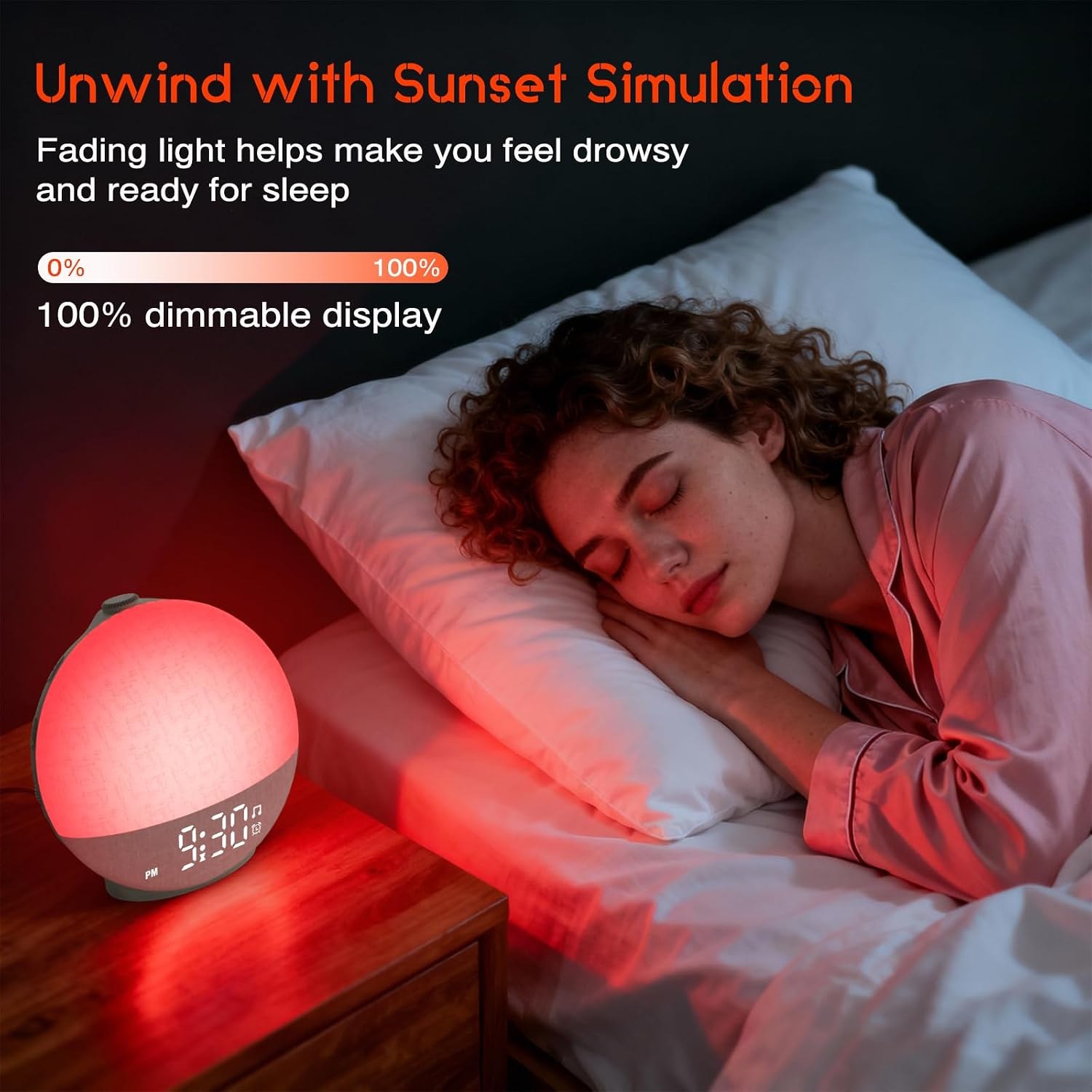
Run the sunrise in reverse: the light dims slowly to darkness while your chosen sound fades with it, cueing your body to switch off. The display is fully dimmable, so nothing glows a hole in the dark.
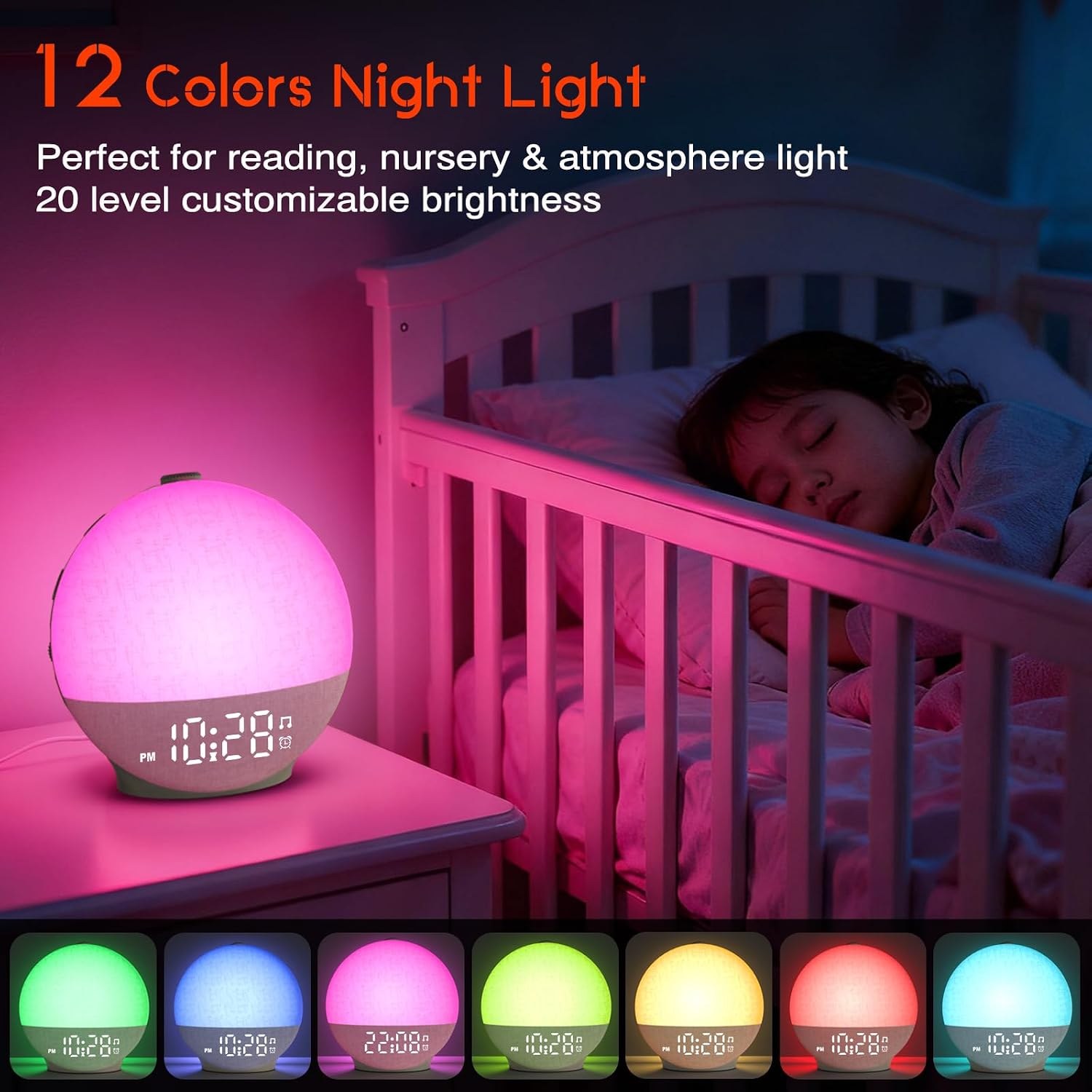
A 12-colour night light
A friendly glow for a nursery, a reading light, or a colour a child picks themselves — with 20 brightness levels so it's visible from the pillow without keeping anyone awake.
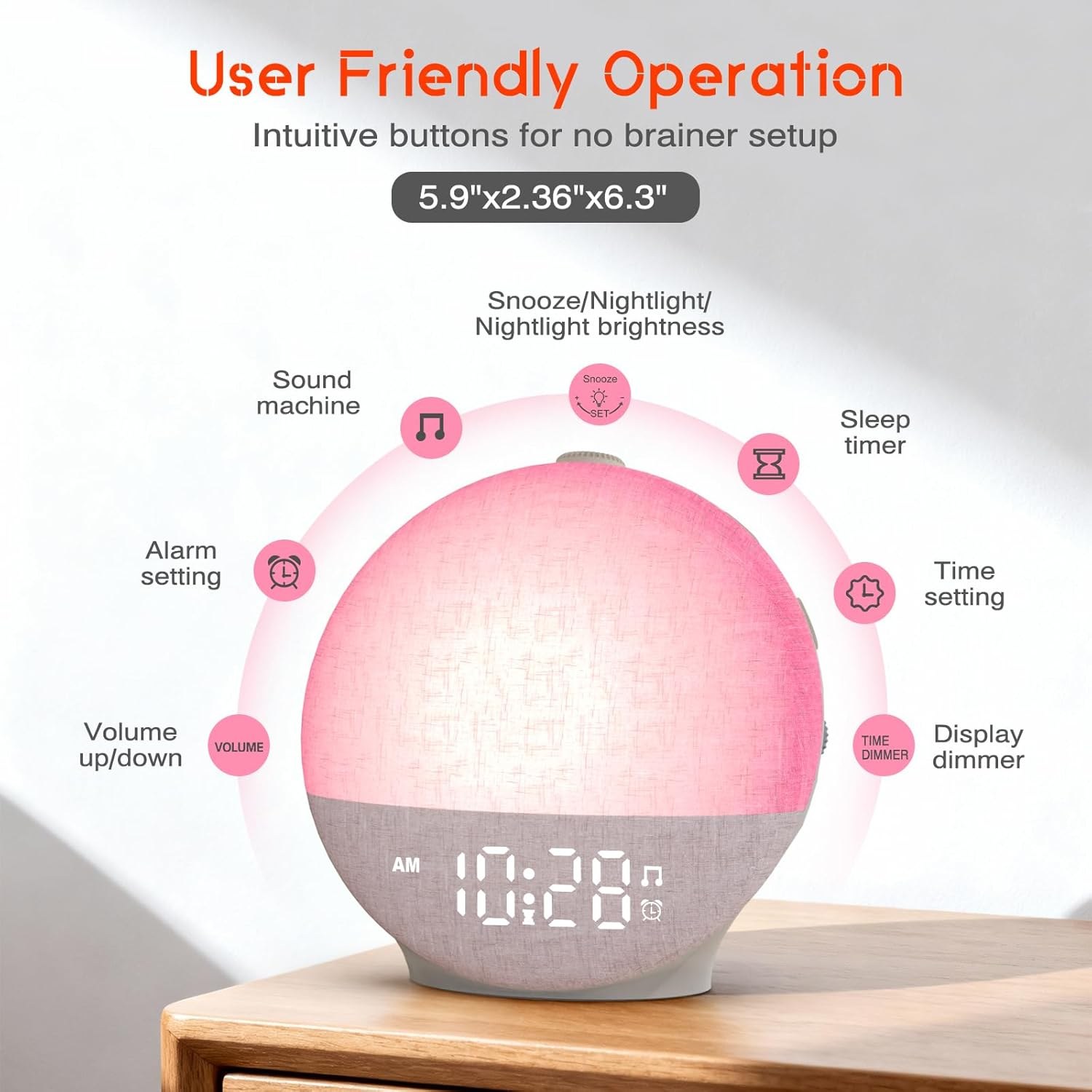
One-knob controls, no app
Every function is a turn or a press of a physical knob — something a six-year-old and a 6am adult can both manage without their glasses. USB-C powered with the adapter and cable in the box.
The Ultimate Guide to Choosing the Perfect Sunrise Alarm Clock
6 min readSunrise Alarm Clocks
A wake up light is one of the few sleep products where the mechanism is
simple and the science is on your side: your body clock runs on light, and a
sunrise alarm clock feeds it the right light at the right time. But the clocks
themselves vary widely. This guide covers what actually matters when choosing
one, for adults, heavy sleepers and children.
Why wake up with light at all?
Sound alarms interrupt sleep; light alarms end it. When morning light reaches
your eyes, even through closed eyelids, it helps signal your body that the day
has begun and gently nudges you toward feeling awake. A
sunrise clock starts that process before the alarm time, so you climb up
through the lighter sleep stages in order instead of being yanked out of a deep
one. The practical result most people notice within a week: less grogginess,
no pounding heart at 6:30, and mornings that start on time without dread.
In UK, where winter sunrise can arrive hours after the school
run starts, a dawn you control is not a luxury.
Sunrise simulation: the feature to judge first
The heart of any wake up light is how it brightens. Look for a gradual
climb, from a faint amber glow to a bright warm light, and a peak brightness
you can adjust. A light that is too gentle will not shift a heavy sleeper,
and one that cannot be turned down will wake a light sleeper far too early.
The better clocks also run the effect in reverse as a sunset mode, dimming
slowly at bedtime to cue your body to wind down, which is half the battle for
children and for anyone whose evenings run on screens.
Sleep sounds and white noise
Most wake up lights double as a white noise machine, and it is worth
choosing one with a proper library rather than three tinny loops. Steady
textures, rain, ocean waves, a fan-like hum, mask the household and street
noises that snap you back awake as you drift off. Birdsong and soft melodies
make kinder wake sounds than a beep. Check for a sleep timer (15 minutes up to
2 or 3 hours is the useful range) so the sound switches itself off once you
are under, and make sure the alarm can also run silently if light alone wakes
you.
Night light and display behaviour
A bedside clock lives in the dark, so how it behaves in the dark matters.
A good one dims its digital display automatically at night, or lets you turn
it right down, so it never glows a hole in the room. If the clock is for a
child, a multi-colour night light is the feature that earns its keep: let
them pick a colour, set it to a faint glow, and it does the reassurance job
without keeping them awake. Brightness adjustment on the night light is
essential; a fixed bright glow is worse than none.
Controls, power and placement
Physical knobs and buttons beat apps for a device you operate half-asleep.
Turning a knob to set brightness, pressing it to cycle colours, is something
both a six-year-old and a 6am adult can manage without their glasses. On
power, most modern clocks run on USB-C with the adapter included; they need
mains power, so plan for a socket within reach of the nightstand. Place the
clock at head height, facing you, an arm's length away, where the light can
reach your closed eyes and the snooze is within reach.
Who benefits most
Heavy sleepers get the most dramatic change, because light plus sound
wakes more reliably than sound alone. Children get calmer school mornings and
a night light in one device. Shift workers can stage a private dawn at any
hour. Couples with different schedules should look for dual alarms so one
clock serves both sides of the bed. And anyone who dreads dark winter mornings
gets the summer version back, on demand.
We're a new shop, so we only publish reviews from verified customers — and we won't pretend to have more than we do. Bought a clock? Tell us how your mornings changed and we'll feature genuine reviews here.
What is a sunrise alarm clock and how does it work?
A sunrise alarm clock wakes you with light instead of just sound. It starts brightening gradually before your alarm time, simulating a natural dawn, so you ease toward waking and surface from sleep in stages. By the time any sound plays, you are already most of the way to awake.
Do wake up lights really help heavy sleepers?
Yes, because they stack two cues. The growing light does the groundwork while the sleeper is still under, then the audio alarm lands on someone already half-awake in a bright room. Heavy sleepers should run the light at full brightness with a sound they cannot ignore.
Are sunrise alarm clocks suitable for children?
They are one of the best alarm types for kids. The light-first wake-up avoids the buzzer battle on school mornings, the coloured night light doubles as a bedtime companion, and physical knob controls are simple enough for a child to use on their own.
Do sunrise clocks help in winter?
Dark mornings are exactly what they are for. When the sun rises after your alarm, a wake up light recreates the summer morning on your nightstand, which is why they are so popular in the UK from October to March.
What is white noise and why would I sleep with it?
White noise is a steady, even sound that masks sudden noises, traffic, doors, a snoring partner, so they do not snap you awake as you drift off. This clock includes 30 sounds like rain, ocean waves and birdsong with a sleep timer.
How long does delivery take?
Orders are dispatched quickly and delivery estimates for your address are shown at checkout before you pay. Delivery is free UK-wide on orders over £50, so this clock qualifies, with a flat £4.99 charge under that.
Can I return it if it does not suit me?
Yes. If it is not right for you, return it in line with our returns policy for a refund. Keep the packaging where you can and contact us first so we can make the return painless.
Not sure which sleeper you're buying for? Ask us a question and we'll help.
Page summary
Sunrise Alarm Clocks sells the Sunrise Alarm Clock Wake-Up Light: a bedside device that
wakes you by gradually brightening before your alarm (dawn simulation), plus a
white noise machine with 30 sleep sounds, a 12-colour night light and a sunset
wind-down. It suits heavy sleepers, children, shift workers and dark British
winter mornings. Controls are physical knobs, no app. Price £69 (was £85),
free UK delivery over £50, easy returns and secure checkout.
We use essential cookies to run the shop and remember your cart. With your consent we also use Google Analytics to see how the site is used. See our privacy policy.